

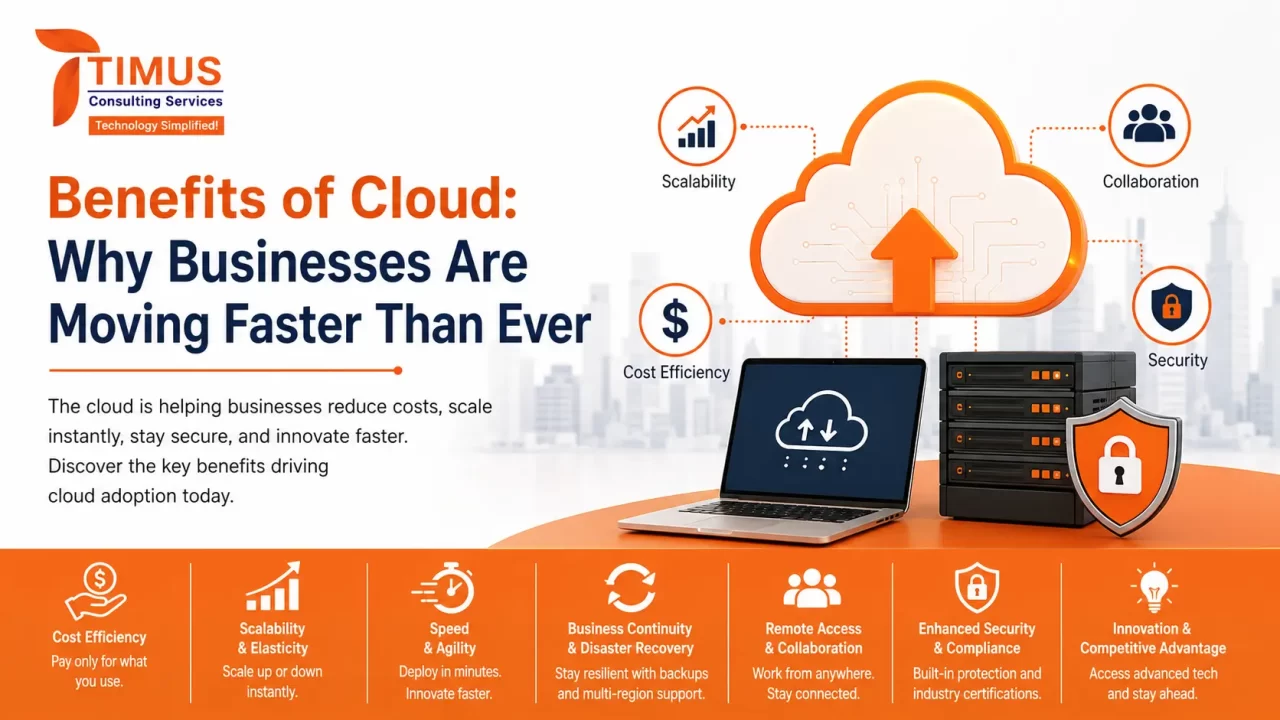
Cloud computing has moved from an emerging trend to the default way organizations build, run, and scale their technology. Whether it’s a startup launching its first product or a global enterprise modernizing legacy systems, the cloud offers a level of speed, flexibility, and cost efficiency that traditional on-premises infrastructure simply cannot match. This guide explores the core benefits of cloud adoption and why it continues to reshape how businesses operate.
What Is Cloud Computing?
Cloud computing is the delivery of computing services — servers, storage, databases, networking, software, and analytics — over the internet, on demand and typically on a pay-as-you-go basis. Instead of owning and maintaining physical hardware, organizations rent computing resources from providers such as AWS, Microsoft Azure, and Google Cloud Platform, scaling capacity up or down as their needs change.
Key Benefits of Cloud Adoption
1. Cost Efficiency
The cloud eliminates the heavy upfront capital expenditure of buying servers and data center equipment. Instead, businesses pay only for the resources they consume. Key advantages include:
- No large upfront hardware investments or long procurement cycles
- Pay-as-you-go pricing that aligns cost with actual usage
- Reduced spending on power, cooling, and physical data center maintenance
- Lower IT staffing overhead for routine infrastructure upkeep
2. Scalability and Elasticity
Cloud platforms let organizations scale resources instantly to match demand, avoiding both over-provisioning and performance bottlenecks. This is especially valuable for:
- Handling seasonal or unpredictable traffic spikes (e.g., online retail during holidays)
- Rapidly scaling up new products or services without hardware delays
- Automatically scaling down during low-demand periods to save costs
3. Speed and Agility
Provisioning a new server used to take weeks; in the cloud, it takes minutes. This speed accelerates innovation across the business:
- Faster development and deployment cycles for new applications
- Instant access to advanced services like AI, machine learning, and big data analytics
- Shorter time-to-market for new products and features
4. Business Continuity and Disaster Recovery
Cloud providers operate geographically distributed data centers, making it far easier to build resilient systems than with a single on-premises facility. Benefits include:
- Automated backups and multi-region data replication
- Fast failover and recovery in the event of an outage or disaster
- Reduced risk of data loss compared to relying on a single physical location
5. Remote Access and Collaboration
Cloud-based tools and infrastructure allow teams to work from anywhere, on any device, with a consistent experience. This supports:
- Distributed and hybrid workforces accessing the same systems in real time
- Real-time collaboration on documents, code, and data
- Simplified onboarding for remote employees and contractors
6. Enhanced Security and Compliance
Leading cloud providers invest heavily in security, often exceeding what individual organizations could achieve on their own. This includes:
- Built-in encryption, identity management, and threat detection tools
- Regular security patching and updates managed by the provider
- Compliance certifications (ISO 27001, SOC 2, GDPR, HIPAA) that ease regulatory burdens
7. Competitive Advantage Through Innovation
The cloud gives organizations of any size access to enterprise-grade technology that would otherwise be out of reach. This levels the playing field by offering:
- On-demand access to AI, machine learning, and advanced analytics platforms
- The ability to experiment and prototype quickly without heavy capital risk
- Faster adaptation to market changes and customer demands
Popular Cloud Service Models
Organizations typically adopt one or more of the following cloud service models:
- IaaS (Infrastructure as a Service) — Virtualized computing resources such as servers and storage (e.g., AWS EC2, Azure VMs)
- PaaS (Platform as a Service) — A managed platform for building and deploying applications (e.g., Google App Engine, Azure App Service)
- SaaS (Software as a Service) — Ready-to-use software delivered over the internet (e.g., Salesforce, Microsoft 365)
Getting Started with Cloud Adoption
A practical roadmap for organizations moving to the cloud:
- Step 1 — Assess: Evaluate current workloads and identify good candidates for migration
- Step 2 — Plan: Choose the right cloud model (public, private, or hybrid) and provider
- Step 3 — Migrate: Move applications and data using a phased, low-risk approach
- Step 4 — Optimize: Continuously monitor usage and costs to right-size resources
- Step 5 — Innovate: Leverage cloud-native services to build new capabilities faster
Conclusion
The benefits of cloud computing go far beyond cost savings. It gives organizations the speed, scalability, resilience, and innovation potential needed to compete in a fast-moving digital landscape. As more businesses embrace cloud-first strategies, those still relying solely on traditional infrastructure risk falling behind in agility and growth.
The organizations that embrace the cloud fully don’t just cut costs — they build the foundation for continuous innovation.
FAQs
1. What are the main benefits of cloud computing?
Cloud computing offers cost savings, scalability, flexibility, enhanced security, disaster recovery, remote access, and faster innovation.
2. How does cloud computing reduce business costs?
It eliminates the need for expensive hardware and maintenance by using a pay-as-you-go pricing model, reducing operational expenses.
3. Is cloud computing secure for businesses?
Yes. Leading cloud providers offer advanced security features such as encryption, identity management, threat detection, and compliance certifications like ISO 27001, SOC 2, GDPR, and HIPAA.
4. How does cloud computing improve business continuity?
Cloud platforms provide automated backups, multi-region replication, and disaster recovery capabilities to minimize downtime and data loss.
5. What are the different cloud service models?
The three primary cloud service models are Infrastructure as a Service (IaaS), Platform as a Service (PaaS), and Software as a Service (SaaS).