
Every Success Story Comes with New Risks
For most businesses, growth is a sign that the right strategies are working. More customers, larger teams, expanded operations, and higher revenues are all positive indicators. Yet behind every growth milestone lies an increase in complexity. Processes that once worked well for a small organization often become difficult to manage as the company scales.
This is where Risk and Control Management (RCM) becomes a business necessity rather than a compliance exercise.
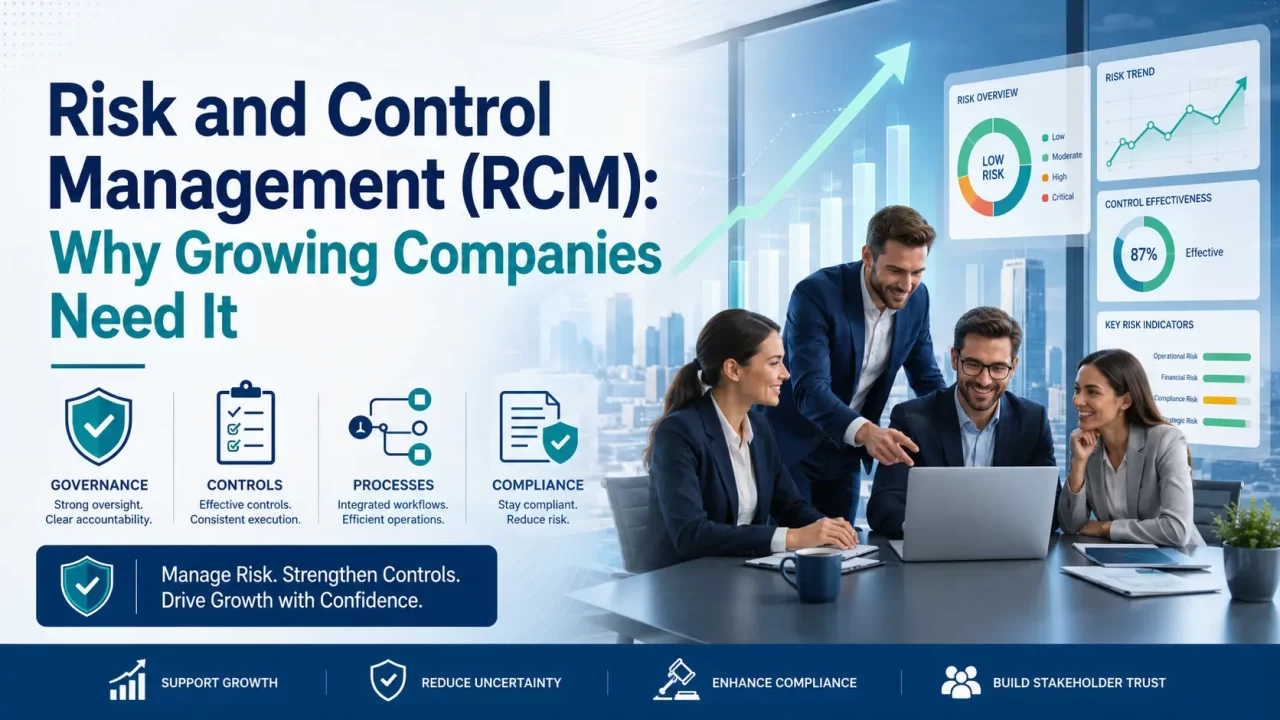
RCM helps organizations understand where risks exist, determine whether existing controls are effective, and create a governance structure that supports sustainable growth. Companies that establish strong risk management practices early are often better equipped to handle uncertainty, protect their reputation, and make confident business decisions.
Understanding Risk and Control Management
Risk and Control Management is a structured approach to identifying potential threats that could prevent an organization from achieving its objectives. Alongside identifying those risks, businesses implement controls that reduce the likelihood or impact of unwanted events.
Think of RCM as the foundation of a well-built skyscraper. Customers may only notice the impressive structure above ground, but its long-term stability depends on the strength of what lies beneath.
Without effective controls, even successful organizations can face operational disruptions, financial losses, regulatory penalties, or cybersecurity incidents.
Growth Changes the Risk and Control Management Landscape
Every stage of business growth introduces new challenges.
A startup may only need a few informal approval processes. However, once that same company expands across multiple locations, hires hundreds of employees, or serves thousands of customers, informal processes become difficult to maintain.
Growth typically introduces:
* More operational activities
* Additional regulatory obligations
* Larger volumes of business data
* Increased dependence on technology
* Greater exposure to cyber threats
* More third-party vendors and partners
RCM helps organizations manage these changes before they become business problems.
Better Decisions Begin with Better Risk Visibility
Business leaders constantly evaluate opportunities such as entering new markets, launching products, acquiring competitors, or investing in technology.
These decisions involve uncertainty.
An effective RCM program provides leadership with a clear understanding of potential risks and their possible impact. Instead of relying solely on intuition, executives can balance opportunity with informed risk analysis.
When risk information becomes part of strategic planning, organizations are more likely to achieve consistent and sustainable outcomes.
Operational Excellence Starts with Strong Controls
Many organizations focus heavily on revenue growth while overlooking internal processes.
As operations expand, inconsistent procedures often lead to:
* Duplicate work
* Human error
* Approval delays
* Process inefficiencies
* Weak accountability
Risk and Control Management encourages organizations to document processes, define responsibilities, and establish standardized controls.
The result is smoother operations, improved productivity, and fewer costly mistakes.
Building Confidence Among Investors and Customers
Business growth often depends on trust.
Investors want confidence that financial information is reliable. Customers expect their personal data to remain secure. Business partners seek assurance that commitments will be fulfilled consistently.
A mature RCM framework demonstrates that an organization takes governance seriously.
It shows stakeholders that decisions are supported by structured processes rather than individual judgment alone.
This confidence can become a competitive advantage, particularly when entering new markets or pursuing strategic partnerships.
Compliance Should Support Business Growth
Regulatory expectations continue to evolve across industries.
Whether organizations must comply with financial regulations, privacy laws, or industry standards, maintaining compliance manually becomes increasingly difficult as businesses grow.
RCM creates repeatable processes that make compliance part of daily operations instead of a last-minute activity before an audit.
Organizations spend less time correcting issues and more time focusing on innovation.
Cyber Risk Has Become a Business Risk
Technology enables businesses to grow faster than ever before. Cloud platforms, remote work, digital payments, and connected applications create tremendous opportunities.
At the same time, they expand the organization’s attack surface.
Cybersecurity is no longer only an IT concern.
Risk and Control Management connects cybersecurity with overall business governance by ensuring that technology risks are identified, monitored, and managed alongside financial and operational risks.
This integrated approach strengthens organizational resilience.
Leveraging Technology to Modernize RCM
Traditional spreadsheets and manual checklists are often insufficient for growing enterprises.
Modern Governance, Risk, and Compliance (GRC) platforms enable organizations to:
* Centralize risk information
* Automate control assessments
* Monitor key risk indicators
* Track remediation activities
* Produce management dashboards
* Generate audit-ready reports
Automation not only reduces administrative effort but also provides leadership with real-time visibility into organizational risk.
Creating a Risk-Aware Culture
One of the greatest benefits of RCM is cultural rather than technical.
Successful organizations encourage employees at every level to think about risk before making decisions.
A risk-aware culture promotes:
* Responsible decision-making
* Transparent communication
* Continuous improvement
* Early identification of issues
* Shared accountability
When risk management becomes part of everyday work rather than an annual exercise, organizations become more agile and resilient.
Looking Ahead
Business growth will always involve uncertainty. The objective is not to eliminate every risk but to understand it, prepare for it, and respond effectively.
Organizations that embed Risk and Control Management into their strategy are better positioned to adapt to market changes, navigate regulatory expectations, and maintain operational excellence.
RCM is no longer simply a governance function. It has become a strategic capability that supports innovation, protects organizational value, and enables confident, sustainable growth.
As companies continue to expand in an increasingly complex business environment, those that invest in strong Risk and Control Management today will be better prepared for the opportunities—and challenges—of tomorrow.
FAQs
1. What is Risk and Control Management (RCM)?
Risk and Control Management is a structured approach to identifying business risks and implementing controls to reduce their likelihood or impact.
2. Why is RCM important for growing companies?
As businesses grow, they face increased operational complexity, regulatory requirements, cybersecurity threats, and third-party risks. RCM helps organizations manage these risks effectively.
3. How does RCM improve business decision-making?
RCM provides leaders with better visibility into potential risks, helping them make informed decisions while balancing opportunities and uncertainties.
4. How does Risk and Control Management support compliance?
RCM creates repeatable processes that integrate compliance into daily operations, making it easier to meet regulatory requirements and prepare for audits.
5. What role does technology play in modern RCM?
Modern GRC platforms can centralize risk data, automate control assessments, monitor key risk indicators, track remediation, and generate reports.