

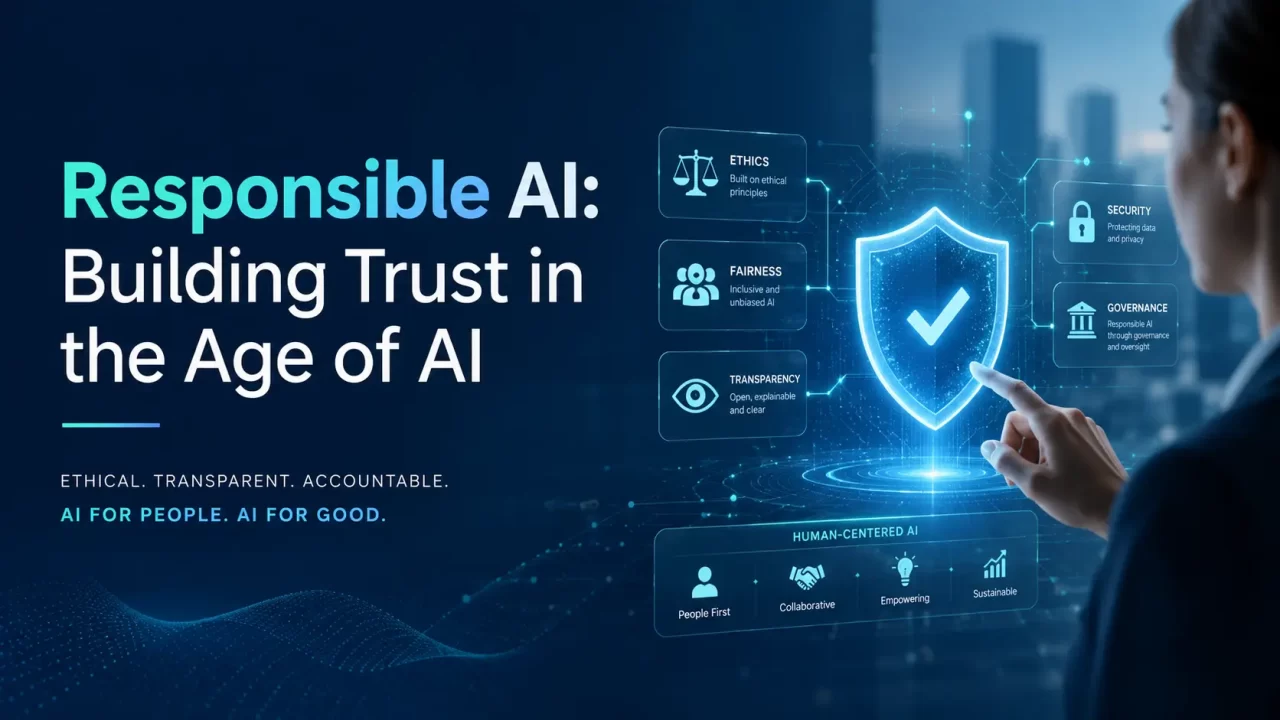
Artificial Intelligence (AI) is transforming industries by improving efficiency, enabling innovation, and enhancing everyday experiences. However, with this rapid growth comes the responsibility to ensure AI is developed and used ethically. This is the foundation of Responsible AI.
It focuses on creating AI systems that are fair, transparent, secure, reliable, and accountable. It ensures that AI benefits everyone while minimizing risks such as bias, privacy concerns, and unintended harm.
Key Principles of Responsible AI
• Fairness: Prevent bias and ensure equitable outcomes.
• Transparency: Make AI decisions understandable and explainable.
• Privacy & Security: Protect user data and maintain strong security practices.
• Accountability: Keep humans responsible for AI-driven decisions.
• Reliability: Build AI systems that are safe, accurate, and dependable.
Why It Matters
It helps build trust, protects user rights, supports regulatory compliance, and encourages the ethical adoption of AI. Organizations that prioritize responsible practices are better equipped to create innovative solutions that people can rely on.
FAQs
1. What is Responsible AI?
It is the development and use of artificial intelligence in a way that is ethical, transparent, fair, secure, and accountable.
2. Why is Responsible AI important?
It helps organizations reduce risks such as bias, privacy violations, security threats, and lack of transparency while building trust among users and stakeholders.
3. What are the key principles of Responsible AI?
The key principles include fairness, transparency, accountability, privacy, security, safety, and explainability.
4. How does Responsible AI help businesses?
It enables businesses to use AI more safely and ethically while reducing regulatory, operational, reputational, and compliance risks.
5. What is AI bias?
AI bias occurs when an AI system produces unfair or discriminatory results due to biased training data, algorithms, or design processes.
6. How can organizations implement Responsible AI?
Organizations can implement through strong governance frameworks, risk assessments, data privacy controls, model monitoring, transparency, and human oversight.