
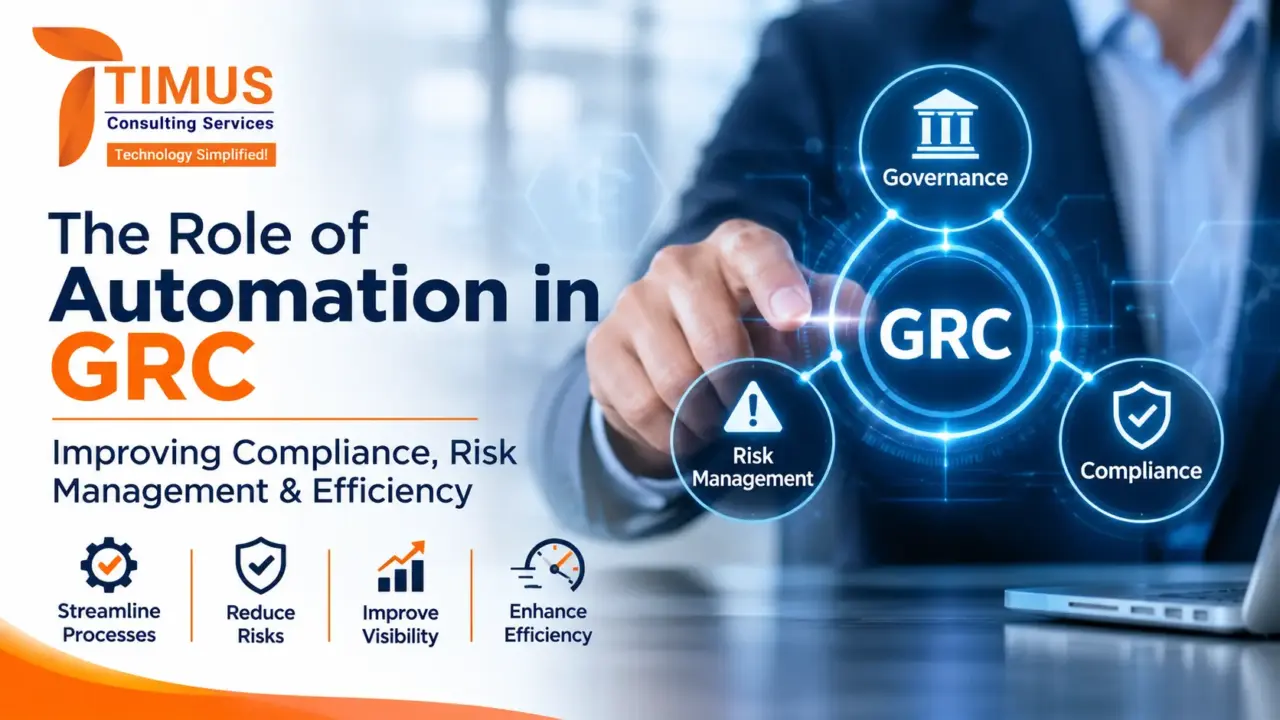
The Role of Automation in GRC: Transforming Governance, Risk, and Compliance
1. Introduction
In today’s rapidly evolving business environment, organizations face increasing challenges in managing risks, maintaining regulatory compliance, and ensuring effective corporate governance. Traditional GRC processes often involve manual activities, spreadsheets, disconnected systems, and time-consuming reporting.
As organizations grow, managing these activities manually becomes more complex and increases the possibility of human errors, missed deadlines, and inconsistent information.
This is where GRC Automation plays an important role. By leveraging technology, workflow automation, centralized platforms, and intelligent tools, organizations can streamline their governance, risk, and compliance processes while improving operational efficiency and transparency.
2. What is GRC Automation?
GRC Automation refers to the use of technology and automated workflows to manage an organization’s governance, risk management, and compliance activities.
Instead of depending entirely on manual processes, organizations can use GRC platforms to automate activities such as:
- Risk identification and assessment.
- Control monitoring and testing.
- Compliance tracking.
- Internal audit management.
- Issue and action plan management.
- Regulatory reporting.
- Notifications and approval workflows.
GRC automation helps organizations manage their processes through a centralized platform, ensuring that information is accurate, accessible, and up to date.
3. Key Areas Where Automation Plays an Important Role in GRC
A. Risk Assessment Automation
Risk assessment is one of the most important activities in GRC management.
Automation helps organizations streamline the process of identifying, evaluating, and monitoring risks.
Key capabilities:
- Automated risk assessment workflows.
- Predefined risk scoring and calculation rules.
- Automatic assignment of risk owners.
- Risk rating based on impact and likelihood.
- Risk heat maps and dashboards.
- Automated reminders for pending assessments.
Example: When a business unit submits a risk assessment, the system can automatically calculate the risk rating based on predefined impact and likelihood values and route it to the appropriate risk owner for review.
B. Control Monitoring and Testing
Internal controls help organizations reduce risks and ensure that business processes operate effectively.
Automation makes it easier to monitor and evaluate controls regularly.
Key capabilities:
- Automated control assessment scheduling.
- Control testing and evidence collection.
- Tracking control effectiveness.
- Identifying failed or ineffective controls.
- Assigning remediation activities.
- Monitoring overdue control assessments.
Example: If a control assessment is due, the system can automatically notify the assigned control owner. If the control fails testing, an issue can be created and assigned for remediation.
C. Compliance Management Automation
Organizations must comply with various regulatory requirements, industry standards, and internal policies.
Automation simplifies compliance management by providing centralized tracking and monitoring.
Key capabilities:
- Regulatory requirement tracking.
- Compliance assessment workflows.
- Automated compliance notifications.
- Policy review and approval workflows.
- Compliance gap identification.
- Evidence and documentation management.
Example: When a regulatory requirement changes, the compliance team can identify the impacted controls and business processes, assign responsible owners, and track the required updates.
D. Internal Audit Automation
Internal audit involves planning, conducting, documenting, and reporting audit activities.
Automation improves the efficiency and consistency of the audit lifecycle.
Key capabilities:
- Audit planning and scheduling.
- Automated audit task assignments.
- Evidence collection and documentation.
- Audit finding management.
- Corrective action tracking.
- Audit status dashboards and reports.
Example: Once an audit finding is identified, the system can automatically create an action plan, assign it to the responsible owner, define a due date, and send reminders until the issue is resolved.
E. Issue and Action Plan Management
Organizations frequently identify issues through audits, risk assessments, compliance reviews, and control testing.
Automation ensures that identified issues are tracked until closure.
Key capabilities:
- Automated issue creation and assignment.
- Predefined issue lifecycle workflows.
- Action plan tracking.
- Due date monitoring.
- Escalation notifications.
- Validation and closure approvals.
Example: If an action plan remains incomplete after its due date, the system can notify the responsible owner and escalate the overdue activity to the appropriate management team.
4. Benefits of GRC Automation
Implementing automation in GRC processes provides several business benefits.
1. Reduced Manual Effort
Automating repetitive activities reduces dependency on spreadsheets, emails, and manual follow-ups.
2. Improved Accuracy
Automated calculations, validation rules, and standardized workflows help minimize human errors.
3. Better Risk Visibility
Centralized dashboards allow management to monitor organizational risks, control effectiveness, and compliance status.
4. Faster Decision-Making
Real-time reports and automated notifications help management respond quickly to emerging risks.
5. Improved Accountability
Task assignments, ownership, and audit trails make it easier to identify who is responsible for each activity.
6. Better Regulatory Compliance
Automated reminders, evidence tracking, and compliance assessments help organizations meet regulatory obligations.
7. Increased Operational Efficiency
Standardized processes and automated approvals reduce delays and improve productivity.
5. Role of GRC Platforms in Automation
Modern GRC platforms provide organizations with centralized solutions to automate their governance, risk, and compliance processes.
Some widely used platforms include:
- IBM OpenPages
- ServiceNow Integrated Risk Management
- MetricStream
- Archer Integrated Risk Management
These platforms support configurable workflows, business rules, automated calculations, dashboards, reporting, access controls, and notifications.
For example, IBM OpenPages enables organizations to configure workflows for risk assessments, control assessments, audit activities, and issue management. It also supports centralized information management, role-based access, reporting, and automated business processes.
By implementing these capabilities, organizations can reduce manual activities and establish a more structured approach to GRC management.
6. Challenges in Implementing GRC Automation
Although automation offers several benefits, organizations may face certain challenges during implementation.
- Complex business requirements: Different departments may follow different processes and approval structures.
- Data quality issues: Inaccurate or incomplete information can affect automated calculations and reports.
- Integration challenges: Connecting GRC platforms with existing enterprise applications may require additional configuration.
- User adoption: Employees may need training to understand and use automated workflows.
- Implementation costs: Platform licensing, configuration, maintenance, and training require investment.
- Over-automation: Not every decision should be automated; critical risk and compliance decisions still require human judgment.
Organizations should therefore adopt automation gradually, starting with repetitive and standardized processes.
7. The Future of GRC Automation: AI and Intelligent Automation
The future of GRC automation is moving beyond traditional workflows and rule-based automation toward Artificial Intelligence (AI) and intelligent automation.
AI can enhance GRC activities by:
- Analyzing large volumes of risk and compliance data.
- Identifying unusual patterns and potential risks.
- Reviewing policies and regulatory documents.
- Summarizing audit findings and compliance reports.
- Identifying missing information in risk assessments.
- Supporting risk prioritization and decision-making.
Generative AI can also assist GRC professionals in reviewing documentation, drafting reports, and identifying potential compliance gaps.
However, AI-generated recommendations should be validated by qualified professionals, particularly when they influence important risk or compliance decisions.
8. Conclusion
GRC automation has become an important part of modern enterprise management. It helps organizations move away from fragmented and manual processes toward centralized, efficient, and transparent operations.
By automating risk assessments, control monitoring, compliance activities, internal audits, and issue management, organizations can improve accountability, reduce operational effort, and strengthen their overall risk management capabilities.
As technology continues to evolve, the combination of GRC platforms, workflow automation, and Artificial Intelligence will play an increasingly important role in helping organizations build a proactive and resilient governance framework.
Automation is not just about reducing manual work; it is about creating a smarter, more connected, and risk-aware organization.
FAQs:
1. What is GRC automation?
GRC automation uses technology to streamline governance, risk management, and compliance processes, reducing manual work and errors.
2. Why is automation important in GRC?
It improves efficiency, strengthens risk visibility, simplifies compliance monitoring, and supports better decision-making.
3. How does GRC automation reduce business risks?
It helps identify potential risks, automate assessments, monitor controls, and generate timely alerts.
4. What are the benefits of GRC automation?
Key benefits include improved accuracy, real-time reporting, centralized data, faster audits, and better regulatory compliance.
5. How does IBM OpenPages support GRC automation?
IBM OpenPages helps organizations manage risks, automate workflows, monitor compliance, and centralize governance activities.