

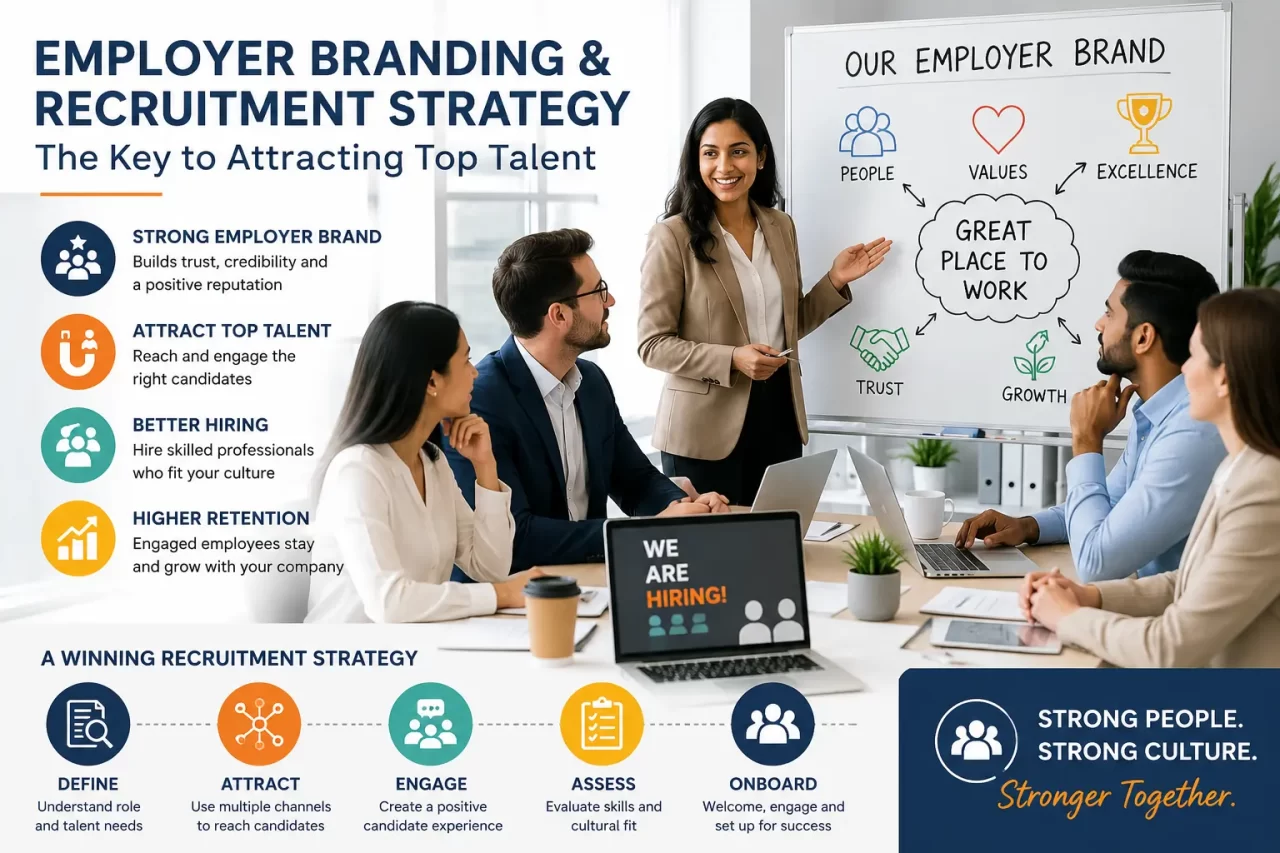
In today’s highly competitive job market, attracting and retaining top talent requires more than just offering competitive salaries and benefits. Organizations must establish a strong employer brand and align it with an effective Employer Branding & Recruitment Strategy to stand out from competitors. Employer branding has become a critical component of talent acquisition, helping companies build credibility, attract qualified candidates, and improve employee retention.
What is Employer Branding?
Employer branding refers to an organization’s reputation as an employer and the value proposition it offers to current and prospective employees. It reflects how employees, candidates, and the public perceive the company’s culture, values, work environment, and career growth opportunities.
A strong employer brand communicates what makes a company unique and why talented professionals should choose to work there. It encompasses everything from employee experiences and workplace culture to leadership, diversity initiatives, and corporate values.
Why Employer Branding Matters
Research consistently shows that candidates evaluate a company’s reputation before applying for a position. Organizations with a positive employer brand often receive a higher volume of quality applications and experience lower hiring costs.
Key benefits of strong employer branding include:
• Increased ability to attract top talent.
• Reduced recruitment costs and time-to-hire.
• Higher employee engagement and retention.
• Improved company reputation and credibility.
• Stronger candidate experience throughout the hiring process.
When employees become advocates for the organization, they naturally contribute to building a positive image that attracts future talent.
Building an Effective Employer Branding & Recruitment Strategy
While employer branding creates interest, a well-structured recruitment strategy converts that interest into successful hires. Recruitment strategy involves identifying, attracting, assessing, and onboarding the right talent to meet business objectives.
1. Define Talent Requirements Clearly
Organizations should begin by understanding current and future workforce needs. Detailed job descriptions, skill requirements, and role expectations help recruiters target suitable candidates more effectively.
2. Leverage Multiple Sourcing Channels
Successful recruitment strategies utilize a combination of sourcing methods, including:
• Professional networking platforms.
• Employee referral programs.
• Recruitment agencies.
• Career portals and job boards.
• Social media recruitment campaigns.
Diversifying sourcing channels expands access to a broader and more qualified talent pool.
3. Focus on Candidate Experience
The Employer Branding & Recruitment Strategy process often serves as a candidate’s first interaction with the company. Timely communication, transparent hiring processes, and respectful engagement create a positive impression, regardless of the hiring outcome.
A seamless candidate experience strengthens employer branding and encourages candidates to recommend the organization to others.
4. Utilize Data-Driven Recruitment
Modern recruitment relies heavily on analytics and performance metrics. Tracking key indicators such as time-to-fill, cost-per-hire, source effectiveness, and offer acceptance rates enables organizations to continuously improve their hiring strategies.
Aligning Employer Branding with Recruitment
Employer branding and recruitment strategy should work together rather than operate independently. Every recruitment touchpoint should reinforce the organization’s brand message and values.
For example, if a company promotes innovation and employee development, its recruitment process should highlight learning opportunities, career progression paths, and success stories from current employees.
Consistency across job advertisements, social media presence, career websites, and candidate communications helps build trust and authenticity.
The Future of Talent Acquisition
As workforce expectations evolve, employer branding will continue to play a significant role in recruitment success. Candidates increasingly seek organizations that offer meaningful work, flexible environments, career growth, diversity, and a strong workplace culture.
Companies that invest in building a compelling employer brand while implementing strategic recruitment practices will be better positioned to attract high-performing professionals and maintain a competitive advantage in the talent market.
Conclusion
Employer branding and recruitment strategy are no longer optional—they are essential business priorities. A strong employer brand attracts the right talent, while a well-planned recruitment strategy ensures that organizations effectively identify and hire individuals who align with their goals and culture. By integrating these two elements, businesses can create a sustainable talent acquisition framework that drives long-term organizational success.
FAQs For Employer Branding & Recruitment Strategy
1. What is employer branding?
Employer branding is the process of promoting a company as an attractive place to work. It reflects the organization’s culture, values, employee experience, and reputation among current and potential employees.
2. Why is employer branding important for recruitment?
A strong employer brand helps attract qualified candidates, reduces hiring costs, improves candidate quality, and increases employee retention by showcasing the organization’s unique value proposition.
3. How does employer branding impact talent acquisition?
Employer branding creates awareness and interest among job seekers, making it easier for organizations to attract top talent and build a strong pipeline of potential candidates.
4. What are the key components of an effective recruitment strategy?
An effective recruitment strategy includes workforce planning, clear job descriptions, multi-channel sourcing, candidate assessment, employer branding, and a positive onboarding process.
5. How can companies improve their employer brand?
Organizations can strengthen their employer brand by promoting company culture, sharing employee success stories, offering career development opportunities, maintaining transparency, and creating a positive workplace environment.
6. What role does candidate experience play in recruitment?
Candidate experience significantly influences how applicants perceive an organization. A smooth, transparent, and respectful hiring process can improve employer reputation and increase offer acceptance rates.