
Introduction:
The recruitment landscape is evolving faster than ever. Driven by technological advancements, changing workforce expectations, and increasing competition for skilled talent, HR professionals must continuously adapt their hiring strategies to stay ahead.
As we move through 2026, organizations are focusing not only on filling vacancies but also on building resilient, future-ready workforces. Understanding the latest recruitment trends can help HR leaders attract top talent, improve candidate experiences, and make smarter hiring decisions.
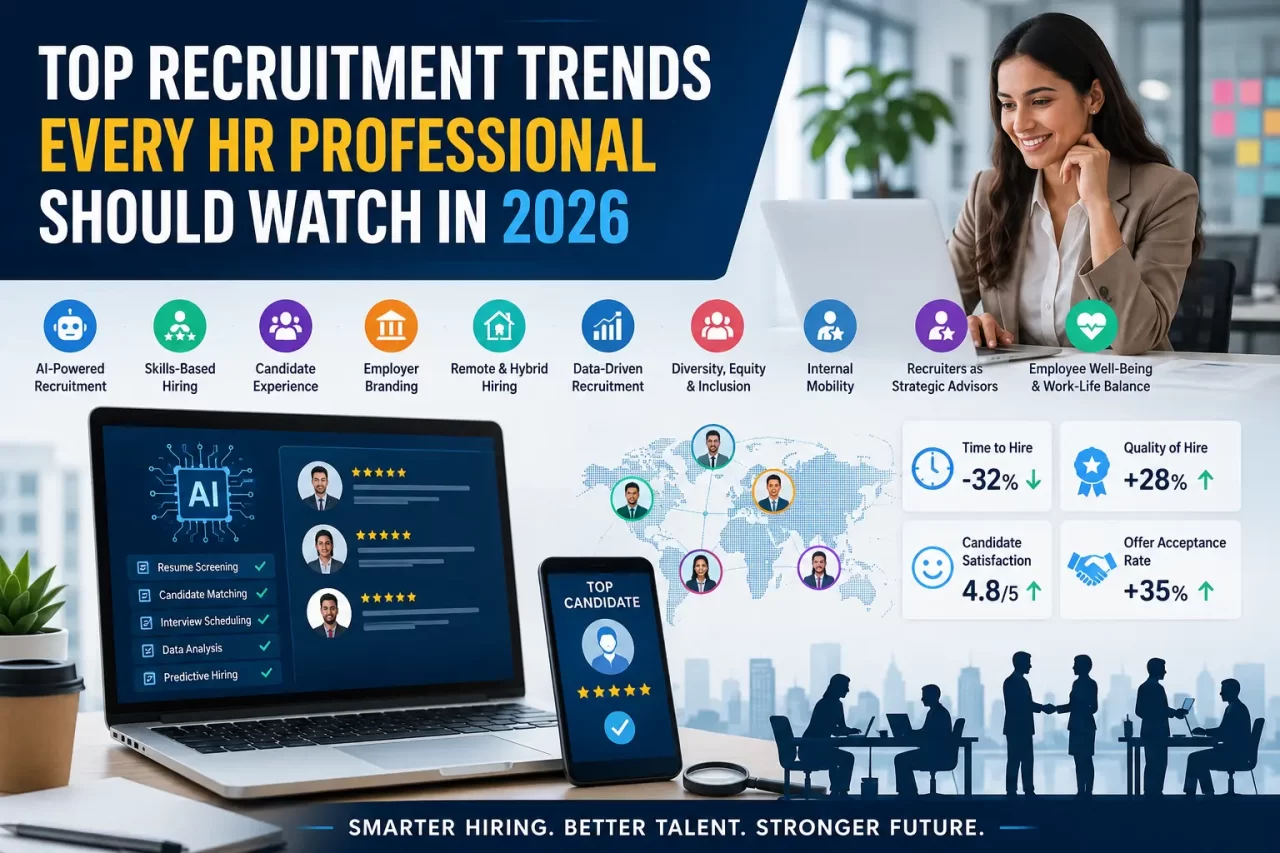
1. AI-Powered Recruitment Becomes Mainstream
Artificial Intelligence is no longer a futuristic concept—it is now an essential part of modern recruitment.
Organizations are increasingly using AI tools to:
- Screen resumes faster
- Source qualified candidates
- Automate interview scheduling
- Analyze recruitment data
- Predict hiring outcomes
While AI improves efficiency, successful companies are balancing automation with human judgment to ensure fairness and maintain meaningful candidate relationships.
2. Skills-Based Hiring Continues to Rise
Employers are shifting their focus from degrees and credentials to skills and competencies.
Many organizations have realized that talented candidates may come from non-traditional educational backgrounds but possess the practical skills needed to excel.
Benefits of skills-based hiring include:
- Access to a larger talent pool
- Improved workforce diversity
- Reduced hiring bias
- Better alignment between job requirements and employee capabilities
In 2026, skills assessments and competency-based interviews will play a larger role in hiring decisions.
3. Candidate Experience Becomes a Competitive Advantage
Candidates today evaluate employers just as carefully as employers evaluate candidates.
A lengthy application process, poor communication, or delayed feedback can result in top candidates accepting offers elsewhere.
Organizations are investing in:
- Faster hiring processes
- Personalized communication
- Transparent recruitment practices
- Mobile-friendly applications
- Continuous candidate engagement
Companies that prioritize candidate experience are more likely to attract and retain high-quality talent.
4. Employer Branding Gains Strategic Importance
In a competitive job market, employer reputation significantly influences hiring success.
Candidates increasingly research organizations before applying, looking at:
- Company culture
- Employee reviews
- Diversity initiatives
- Leadership credibility
- Career growth opportunities
HR teams are collaborating closely with marketing and leadership teams to strengthen employer branding through social media, employee advocacy, and authentic storytelling.
5. Remote and Hybrid Hiring Remains Strong
Although many organizations have returned to office-based work, hybrid and remote opportunities continue to attract top talent.
Candidates increasingly value flexibility and work-life balance.
Recruiters must adapt by:
- Expanding talent searches beyond geographical boundaries
- Conducting virtual interviews effectively
- Developing remote onboarding programs
- Evaluating candidates for virtual collaboration skills
Flexibility remains a major factor influencing job acceptance decisions.
6. Data-Driven Recruitment Takes Center Stage
Recruitment decisions are becoming increasingly data-driven.
HR professionals are leveraging analytics to track:
- Time-to-hire
- Cost-per-hire
- Source effectiveness
- Candidate conversion rates
- Quality of hire
By analyzing recruitment metrics, organizations can identify bottlenecks, improve hiring strategies, and optimize resource allocation.
7. Internal Mobility Becomes a Priority
Many organizations are discovering that the best candidates may already be within the company.
Internal hiring programs help businesses:
- Retain top performers
- Reduce recruitment costs
- Improve employee engagement
- Accelerate workforce development
Upskilling and reskilling initiatives are supporting this trend by preparing employees for future roles and leadership opportunities.
8. Diversity, Equity, and Inclusion Continue to Shape Hiring
Diversity and inclusion are no longer optional initiatives—they are business priorities.
Organizations are implementing more inclusive hiring practices by:
- Reducing unconscious bias
- Expanding sourcing channels
- Using structured interviews
- Building diverse candidate pipelines
Companies with diverse workforces often benefit from greater innovation, stronger decision-making, and improved employee satisfaction.
9. Recruiters Are Becoming Strategic Talent Advisors
The role of recruiters is evolving beyond filling positions.
Today’s recruiters are expected to:
- Advise hiring managers
- Understand workforce planning
- Analyze market trends
- Build talent communities
- Support employer branding efforts
As automation handles routine tasks, recruiters are focusing more on strategic talent acquisition and business partnership.
10. Employee Well-Being Influences Recruitment Success
Job seekers increasingly prioritize organizations that support employee well-being.
Candidates are evaluating employers based on:
- Mental health initiatives
- Flexible work policies
- Career development opportunities
- Workplace culture
- Employee support programs
Organizations that genuinely invest in employee well-being are more likely to attract and retain high-performing talent.
Final Thoughts
The future of recruitment is being shaped by technology, changing workforce expectations, and evolving business needs. While AI, automation, and analytics are transforming hiring processes, the human elements of recruitment—relationship-building, communication, and strategic thinking—remain essential.
HR professionals who embrace these trends while maintaining a people-first approach will be best positioned to attract top talent and build successful, future-ready organizations.
As 2026 continues to unfold, the most successful recruiters will not simply react to change—they will lead it.
FAQs
1. What are the biggest recruitment trends in 2026?
The biggest recruitment trends include AI-powered hiring, skills-based recruitment, data-driven hiring decisions, remote and hybrid hiring, and a stronger focus on candidate experience.
2. How is AI transforming recruitment in 2026?
AI helps recruiters automate resume screening, candidate sourcing, interview scheduling, and hiring analytics, improving efficiency and decision-making.
3. What is skills-based hiring?
Skills-based hiring focuses on a candidate’s abilities and competencies rather than educational qualifications, helping organizations access a broader talent pool.
4. Why is candidate experience important in recruitment?
A positive candidate experience improves employer reputation, increases offer acceptance rates, and helps attract top talent in a competitive job market.
5. How does employer branding impact hiring success?
A strong employer brand attracts qualified candidates by showcasing company culture, growth opportunities, employee experiences, and workplace values.