

Introduction
With the rapid growth of cloud computing, remote work, and sophisticated cyber threats, traditional security models are no longer sufficient. Organizations OpenPages today require a smarter and more proactive approach to cybersecurity to protect sensitive data, applications, and digital infrastructure.
The Zero Trust Security Model has emerged as one of the most effective cybersecurity strategies for modern enterprises. Its core principle is simple:“Never trust, always verify.”
This means no user, device, application, or system is automatically trusted — even if it operates within the organization’s internal network.
Solutions like IBM OpenPages help organizations strengthen Zero Trust strategies by improving governance, risk management, compliance monitoring, and operational visibility.
What is Zero Trust Security?
Zero Trust is a cybersecurity framework that continuously verifies every user, device, and access request before granting permission to OpenPages organizational resources.
Unlike traditional security models that trust users inside the network perimeter, Zero Trust assumes threats can exist both outside and inside the network.
The model continuously evaluates:
- User identity
- Device health and security
- Access permissions
- Network behavior
- Application activity
This approach significantly reduces the risk of unauthorized access and cyberattacks.
Core Principles of Zero Trust Security
1. Verify Every Access Request
Every login attempt and access request must be authenticated and validated.
Organizations commonly use:
- Strong passwords
- Multi-Factor Authentication (MFA)
- Biometric verification
- Identity and Access Management (IAM)
With IBM OpenPages, organizations can improve access governance and monitor compliance-related risks more effectively.
2. Least Privilege Access
Zero Trust follows the principle of least privilege, where users receive access only to the systems and data required for their specific roles.
This minimizes:
- Insider threats
- Unauthorized data exposure
- Accidental misuse of sensitive information
Limiting permissions also reduces the overall attack surface of the organization.
3. Continuous Monitoring and Analytics
Zero Trust continuously monitors:
- User behavior
- Device activity
- Network traffic
- System anomalies
Real-time monitoring helps organizations quickly detect suspicious activities and respond before threats escalate.
Integrated risk platforms like IBM OpenPages support centralized monitoring, policy management, and risk visibility across enterprise environments.
4. Assume Breach
Instead of assuming systems are secure, Zero Trust assumes attackers may already be present inside the network.
The strategy focuses on:
- Limiting lateral movement
- Segmenting systems
- Containing threats quickly
- Reducing potential damage
This proactive mindset strengthens overall cybersecurity resilience.
Benefits of Zero Trust Security
Organizations adopting Zero Trust can achieve several important advantages:
Stronger Protection Against Cyberattacks
Continuous verification helps prevent unauthorized access and reduces the impact of ransomware, phishing, and insider threats.
Better Security for Remote Work and Cloud Systems
Zero Trust OpenPages is ideal for hybrid work environments where employees access systems from multiple devices and locations.
Improved Compliance and Risk Management
Businesses can better align with regulatory standards and cybersecurity frameworks through centralized governance and continuous monitoring.
Faster Threat Detection
Real-time analytics and monitoring allow organizations to identify and respond to threats more efficiently.
Reduced Risk of Data Breaches
Access restrictions and segmentation help minimize exposure to sensitive business data.
Role of IBM OpenPages in Zero Trust Security
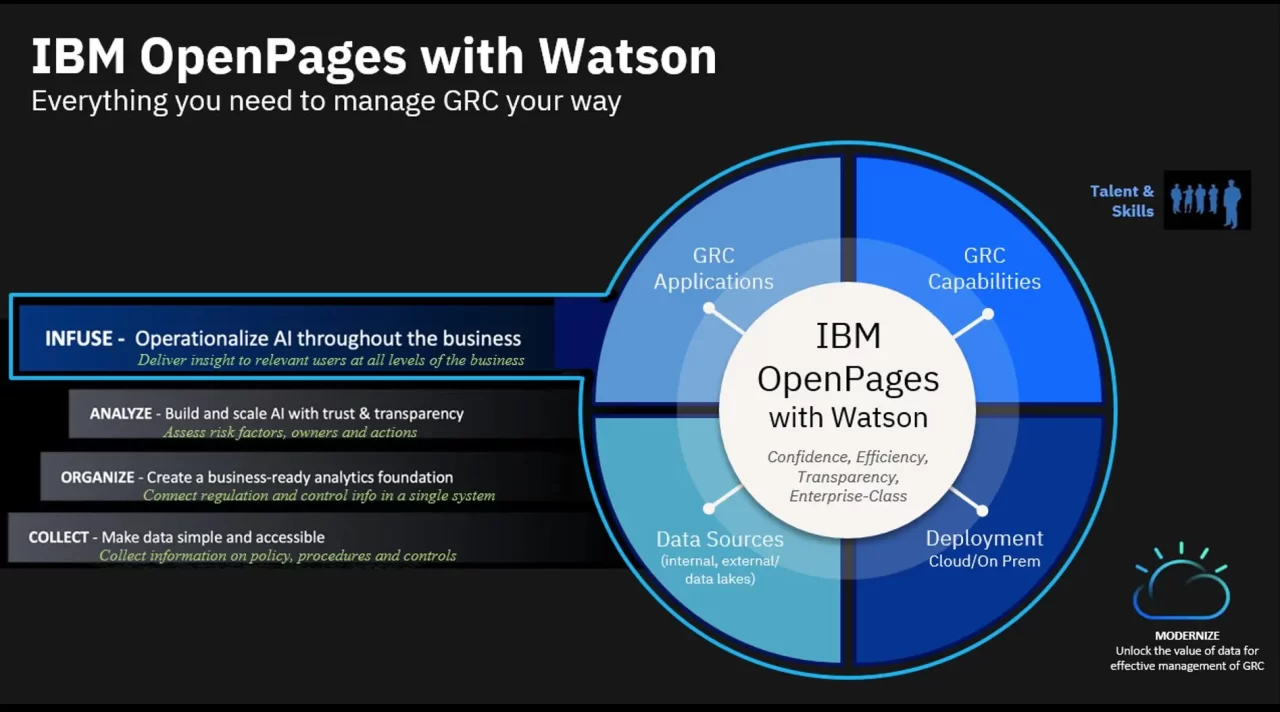
IBM OpenPages supports Zero Trust initiatives by helping organizations manage governance, risk, and compliance (GRC) activities from a centralized platform.
Key capabilities include:
- Risk assessment and monitoring
- Policy and compliance management
- Operational risk visibility
- Audit management
- Workflow automation
- Integrated reporting and analytics
By combining Zero Trust principles with IBM OpenPages, organizations can create a stronger cybersecurity and risk management framework.
Challenges in Implementing Zero Trust
Although Zero Trust offers significant benefits, implementation can be complex and may require:
- Advanced cybersecurity tools
- Strong identity management systems
- Employee security awareness training
- Integration with legacy systems
- Continuous monitoring infrastructure
A phased implementation strategy often helps organizations transition more effectively.
Best Practices for Zero Trust Implementation
Organizations can improve Zero Trust adoption by following these best practices:
- Enable Multi-Factor Authentication (MFA)
- Implement role-based access controls
- Monitor network traffic continuously
- Secure endpoints and mobile devices
- Segment networks and applications
- Conduct regular security audits
- Use centralized risk and compliance platforms like IBM OpenPages
Conclusion
The Zero Trust Security Model is becoming essential for modern organizations facing increasingly sophisticated cyber threats. By continuously verifying users, monitoring activities, and limiting access, businesses can better protect their systems, cloud environments, and sensitive data.
Combining Zero Trust principles OpenPages with advanced governance and risk management platforms such as IBM OpenPages enables organizations to build a more secure, compliant, and resilient cybersecurity strategy for the future.
FAQs For IBM Openpages
1. What is the Zero Trust Security Model?
The Zero Trust Security Model is a cybersecurity approach that follows the principle of “Never Trust, Always Verify.” It requires continuous authentication and authorization for every user, device, and application.
2. Why is Zero Trust important for modern organizations?
Zero Trust helps OpenPages organizations protect sensitive data, cloud environments, and remote work systems from cyber threats, unauthorized access, and data breaches.
3. How does IBM OpenPages support Zero Trust?
IBM OpenPages helps organizations manage governance, risk, compliance, policy monitoring, and operational risk visibility within a centralized platform.
4. What are the core principles of Zero Trust Security?
The main principles include:
- Verify every access request
- Least privilege access
- Continuous monitoring
- Assume breach
5. What are the benefits of implementing Zero Trust?
Benefits include:
- Stronger cybersecurity protection
- Better remote work security
- Faster threat detection
- Reduced risk of data breaches
- Improved regulatory compliance