
Why Organizations Are Accelerating Their Cloud Journey
In today’s rapidly evolving digital landscape, businesses need technology that is scalable, secure, and agile. Traditional on-premises infrastructure often struggles to keep pace with changing business requirements, increasing operational costs, and growing cybersecurity threats. This is why organizations across industries are embracing cloud computing as a strategic enabler of growth and innovation.
Cloud computing allows businesses to access computing resources, applications, and storage over the internet, eliminating the need for extensive on-site infrastructure. Whether an organization is looking to improve efficiency, support remote work, or accelerate digital transformation, the cloud offers significant advantages.
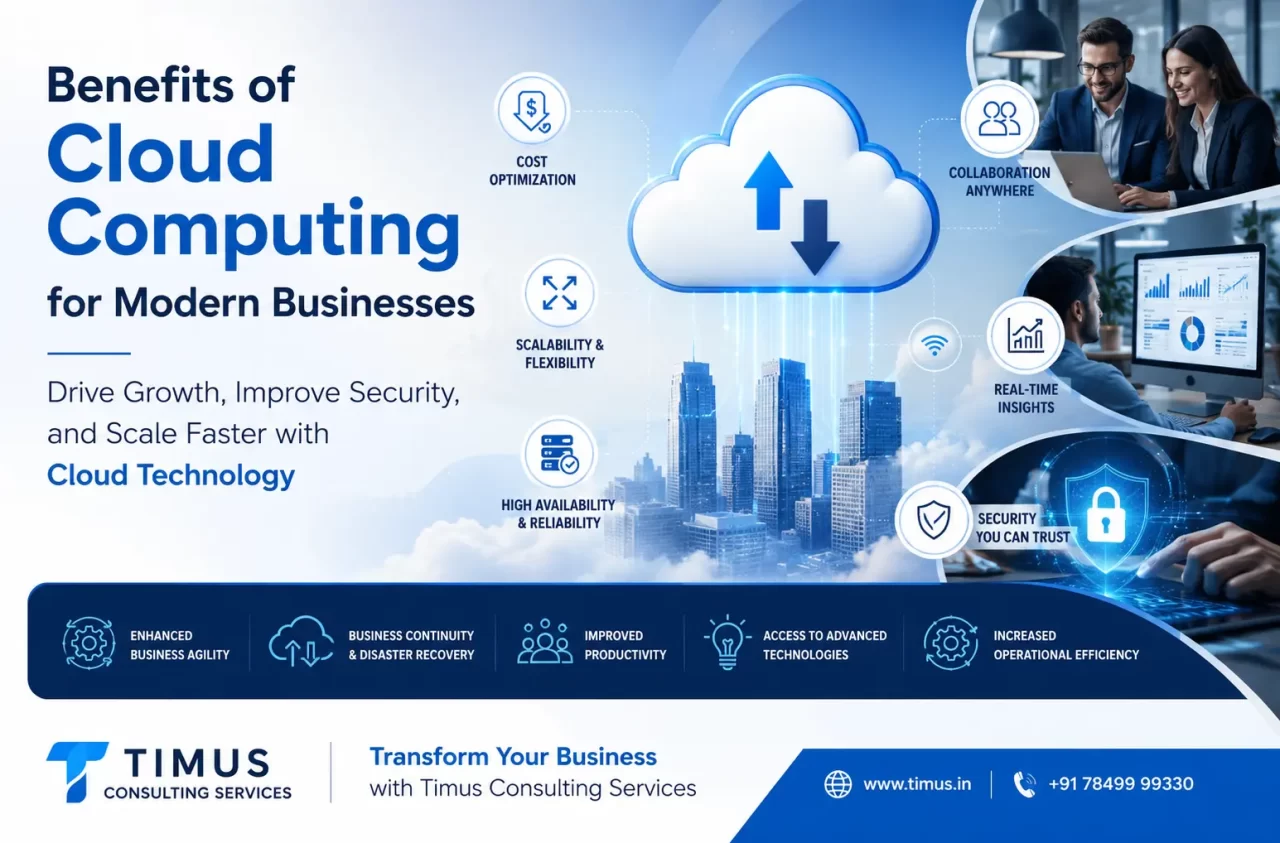
1. Cost Optimization
One of the most compelling benefits of cloud computing is cost savings. Traditional IT infrastructure requires significant capital investment in servers, networking equipment, data centers, and ongoing maintenance.
Cloud platforms operate on a pay-as-you-go model, allowing organizations to:
- Reduce upfront capital expenditure
- Pay only for the resources they use
- Lower maintenance and hardware replacement costs
- Minimize energy and facility expenses
This enables businesses to allocate resources more effectively and focus investments on innovation and growth.
2. Scalability and Flexibility
Business demands can change rapidly. Cloud environments provide the flexibility to scale resources up or down based on operational needs.
Organizations can:
- Handle seasonal demand fluctuations
- Support business expansion without infrastructure constraints
- Deploy new applications quickly
- Increase storage and computing power on demand
This scalability ensures businesses can respond quickly to market opportunities while maintaining operational efficiency.
3. Enhanced Business Agility
Cloud computing enables organizations to innovate faster by reducing the time required to deploy new applications and services.
Benefits include:
- Faster product development cycles
- Accelerated software deployment
- Improved collaboration across teams
- Rapid adoption of emerging technologies
By leveraging cloud services, businesses can become more responsive to customer needs and market changes.
4. Improved Security and Compliance
Leading cloud providers invest heavily in security technologies, monitoring systems, and compliance frameworks. While security remains a shared responsibility, cloud environments often provide stronger protection than many traditional on-premises systems.
Cloud security features include:
- Data encryption
- Identity and access management
- Continuous security monitoring
- Automated threat detection
- Backup and disaster recovery capabilities
Organizations can also leverage industry-specific compliance standards to meet regulatory requirements more effectively.
5. Business Continuity and Disaster Recovery
Unexpected disruptions such as hardware failures, cyberattacks, or natural disasters can impact business operations significantly.
Cloud solutions improve resilience through:
- Automated backups
- Geographic redundancy
- Rapid recovery capabilities
- High availability infrastructure
These capabilities help organizations minimize downtime and maintain critical business operations during unforeseen events.
6. Remote Work and Collaboration
The modern workforce increasingly relies on remote and hybrid work models. Cloud computing enables employees to securely access applications and data from virtually anywhere.
Benefits include:
- Improved workforce productivity
- Real-time collaboration
- Secure remote access
- Seamless communication across locations
Cloud-based collaboration tools help teams work efficiently regardless of geographical boundaries.
7. Access to Advanced Technologies
Cloud platforms provide organizations with access to cutting-edge technologies that may otherwise require significant investment.
These technologies include:
- Artificial Intelligence (AI)
- Machine Learning (ML)
- Advanced Analytics
- Internet of Things (IoT)
- Automation Solutions
Businesses can leverage these capabilities to improve decision-making, optimize operations, and create innovative customer experiences.
8. Increased Operational Efficiency
Cloud computing automates many routine IT tasks, allowing internal teams to focus on strategic initiatives rather than infrastructure management.
Organizations benefit from:
- Automated software updates
- Simplified infrastructure management
- Centralized monitoring
- Faster issue resolution
- Improved resource utilization
This leads to higher productivity and reduced administrative overhead.
The Future is Cloud-Driven
Cloud computing is no longer just an IT initiative—it is a business strategy. Organizations that embrace cloud technologies gain the flexibility, resilience, and innovation capabilities needed to remain competitive in a digital-first world.
Whether you are considering cloud migration, cloud security enhancement, infrastructure modernization, or multi-cloud strategies, a well-planned cloud transformation can deliver measurable business value and long-term growth.
How Timus Consulting Services Can Help
At Timus Consulting Services, we help organizations successfully navigate their cloud transformation journey. Our cloud consulting and implementation services enable businesses to modernize infrastructure, enhance security, optimize costs, and accelerate digital innovation.
Our expertise includes:
- Cloud Strategy & Assessment
- Cloud Migration Services
- Cloud Security & Compliance
- Infrastructure Modernization
- Multi-Cloud & Hybrid Cloud Solutions
- Managed Cloud Services
FAQs
1. What is cloud computing?
Cloud computing is the delivery of computing services such as servers, storage, databases, networking, and software over the internet, enabling businesses to access resources on demand without maintaining physical infrastructure.
2. How does cloud computing reduce business costs?
Cloud computing reduces costs by eliminating large upfront investments in hardware and infrastructure. Businesses only pay for the resources they use, reducing maintenance, energy, and operational expenses.
3. Is cloud computing secure for businesses?
Yes. Leading cloud providers offer advanced security features such as data encryption, identity and access management, continuous monitoring, automated threat detection, and disaster recovery capabilities.
4. How does cloud computing improve scalability?
Cloud platforms allow businesses to quickly increase or decrease computing resources based on demand, ensuring flexibility during business growth, seasonal spikes, or changing operational requirements.
5. Can cloud computing support remote work?
Absolutely. Cloud-based applications and storage enable employees to securely access business resources from anywhere, supporting remote and hybrid work environments.