

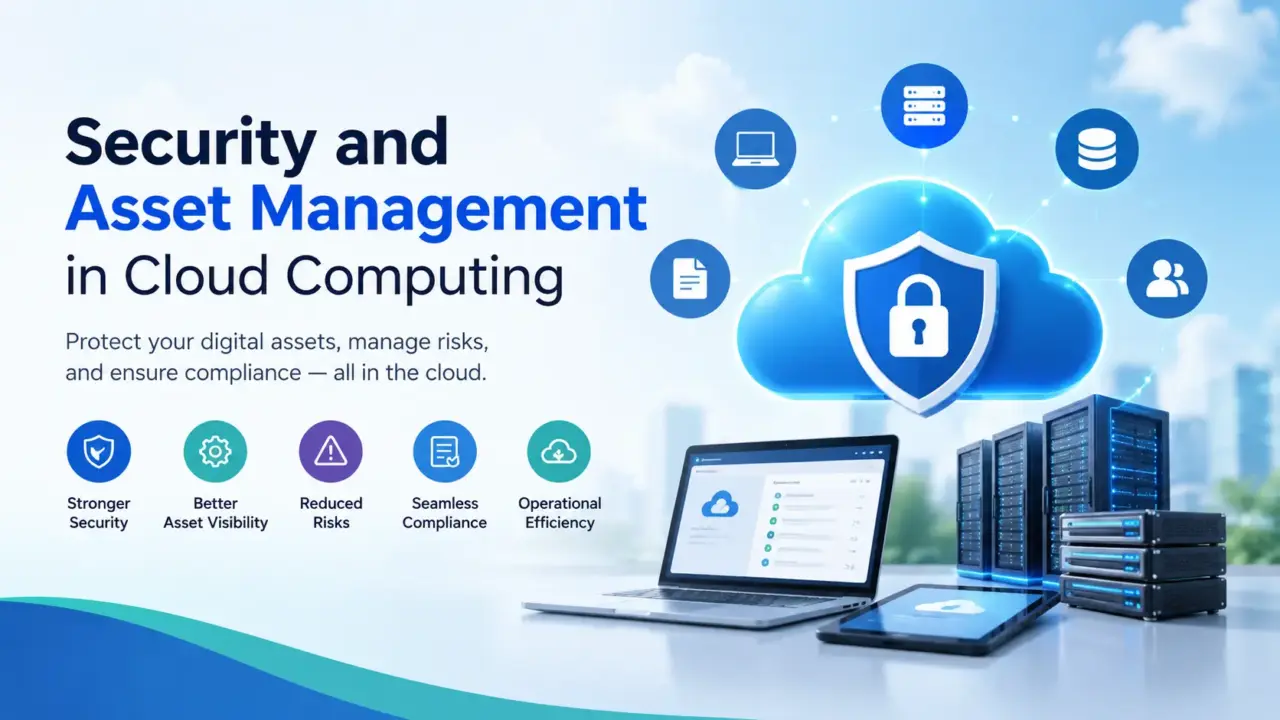
Introduction
Cloud computing has transformed the way businesses store, manage, and access their digital resources. Organizations are increasingly adopting cloud platforms such as Amazon Web Services (AWS), Microsoft Azure, and Google Cloud to improve scalability, flexibility, and operational efficiency.
However, as cloud adoption grows, businesses face new challenges related to data security, resource visibility, and asset management.
Cloud security and asset management help organizations protect sensitive information, monitor cloud resources, reduce operational risks, and optimize infrastructure costs.
In this blog, we will explore cloud security, cloud asset management, common challenges, benefits, and best practices for protecting cloud environments.
What Is Cloud Security?
Cloud security refers to the technologies, policies, procedures, and controls used to protect cloud-based applications, infrastructure, and data from unauthorized access, cyberattacks, and security threats.
Effective cloud security helps businesses maintain the confidentiality, integrity, and availability of their digital assets.
Key Components of Cloud Security
1. Identity and Access Management (IAM)
IAM ensures that only authorized users and applications can access cloud resources. Role-based access control, least-privilege permissions, and multi-factor authentication help reduce unauthorized access.
2. Data Encryption
Encryption protects sensitive information both when it is stored (data at rest) and when it is transmitted (data in transit).
3. Network Security
Firewalls, network segmentation, private connectivity, and traffic monitoring help protect cloud infrastructure from network-based threats.
4. Threat Detection and Monitoring
Continuous security monitoring helps organizations identify suspicious activities, detect potential attacks, and respond to incidents.
5. Compliance Management
Cloud security controls help organizations support compliance with applicable requirements and frameworks, including GDPR, HIPAA, ISO 27001, and other industry-specific standards.
What Is Cloud Asset Management?
Cloud asset management is the process of discovering, tracking, monitoring, and optimizing cloud-based resources throughout their lifecycle.
These resources may include:
- Virtual machines and cloud servers
- Cloud storage and databases
- Networking components
- Software applications and licenses
- Containers and Kubernetes clusters
- Cloud identities and service accounts
Cloud asset management helps IT teams understand which resources exist, who owns them, how they are configured, and whether they are being used efficiently.
Why Security and Asset Management Matter in the Cloud
1. Improved Data Protection
Organizations store valuable customer information, financial records, and business data in cloud environments.
Security controls help protect this information against unauthorized access and data breaches.
2. Better Visibility into Cloud Resources
Without effective asset management, organizations may lose track of resources deployed across multiple cloud accounts and platforms.
A centralized asset inventory improves visibility and accountability.
3. Reduced Cloud Costs
Unused virtual machines, oversized storage systems, and forgotten resources can increase cloud spending.
Cloud asset management helps identify opportunities to remove unnecessary resources and optimize costs.
4. Stronger Regulatory Compliance
Organizations must understand where sensitive data is stored, who can access it, and which security controls protect it.
Accurate asset inventories and continuous monitoring support audits and compliance activities.
5. Faster Incident Response
When security teams know which assets exist and which business services depend on them, they can investigate vulnerabilities and respond to incidents more effectively.
Common Challenges in Cloud Security and Asset Management
Cloud Misconfigurations
Incorrect permissions, publicly accessible storage, and insecure network configurations may expose sensitive information.
Shadow IT
Employees or departments may create cloud resources without following approved IT processes, reducing organizational visibility.
Multi-Cloud Complexity
Managing resources across AWS, Azure, Google Cloud, and other platforms can create inconsistent security policies and fragmented inventories.
Lack of Continuous Monitoring
Without continuous monitoring, organizations may fail to detect unauthorized changes, vulnerable systems, or suspicious activities.
Uncontrolled Cloud Spending
Poor resource tracking can result in unnecessary subscriptions, unused infrastructure, and unexpected costs.
Best Practices for Cloud Security and Asset Management
1. Maintain a Centralized Cloud Asset Inventory
Automatically discover and record cloud resources across accounts, regions, and platforms.
Track important information such as asset ownership, environment, location, configuration, and business importance.
2. Implement Strong Access Controls
Apply least-privilege access, enforce multi-factor authentication, and regularly review permissions.
3. Enable Continuous Security Monitoring
Use cloud-native monitoring and security tools to detect unusual behavior, configuration changes, and security vulnerabilities.
4. Encrypt Sensitive Data
Protect sensitive data using appropriate encryption mechanisms and secure key management practices.
5. Automate Security and Asset Management
Automation can help organizations discover resources, identify misconfigurations, enforce policies, and reduce manual administrative work.
6. Conduct Regular Security Assessments
Perform vulnerability assessments, configuration reviews, and security audits to identify weaknesses before attackers exploit them.
7. Optimize Cloud Resource Utilization
Regularly review resource usage, remove unnecessary assets, and right-size infrastructure to control operational costs.
Popular Tools for Cloud Security and Asset Management
Several cloud-native and third-party tools can support security and asset management activities.
Amazon Web Services (AWS)
AWS Config, Amazon GuardDuty, AWS Security Hub, and AWS Resource Explorer provide capabilities for resource visibility, configuration tracking, and security monitoring.
Microsoft Azure
Microsoft Defender for Cloud, Azure Policy, and Azure Resource Graph help organizations assess security posture, enforce policies, and discover cloud resources.
Google Cloud
Security Command Center, Cloud Asset Inventory, and Cloud Monitoring support asset visibility, security findings, and infrastructure monitoring.
Organizations should select tools based on their cloud environment, operational requirements, security objectives, and budget.
The Future of Cloud Security and Asset Management
Cloud security and asset management are evolving with advancements in artificial intelligence, automation, and cloud-native technologies.
Organizations are increasingly exploring AI-assisted threat detection, automated asset discovery, continuous compliance monitoring, and zero-trust security approaches.
These capabilities can help security teams identify risks more quickly and manage increasingly complex cloud environments.
However, effective implementation still requires strong governance, accurate asset inventories, clear ownership, and human oversight.
Conclusion
Security and asset management are essential components of a successful cloud strategy.
As businesses continue to adopt cloud technologies, they must protect sensitive data while maintaining visibility and control over their digital resources.
By implementing strong access controls, maintaining accurate asset inventories, monitoring security risks, and optimizing resource utilization, organizations can build cloud environments that are more secure, efficient, and resilient.
FAQs: Security and Asset Management in Cloud Computing
1. What is cloud security and asset management?
Cloud security and asset management involve protecting cloud-based resources, tracking digital assets, and ensuring data remains secure, accessible, and compliant.
2. Why is cloud asset management important?
It helps organizations maintain visibility into cloud resources, reduce unnecessary costs, prevent unauthorized access, and improve operational efficiency.
3. What are the main cloud security risks?
Common risks include data breaches, misconfigured cloud services, unauthorized access, insecure APIs, data loss, and compliance violations.
4. How can organizations protect cloud assets?
Organizations can use encryption, multi-factor authentication (MFA), role-based access controls, continuous monitoring, regular security audits, and automated asset discovery.
5. What is the difference between cloud security and cloud asset management?
Cloud security focuses on protecting cloud environments and data, while cloud asset management focuses on identifying, tracking, organizing, and optimizing cloud resources.
6. How does cloud asset management support compliance?
It provides visibility into assets, ownership, access permissions, and configurations, helping organizations maintain audit records and meet regulatory requirements.